Huang Hao
The Romance of the Three KingdomsHuang Hao is a eunuch at the court of Shu whose access to the second ruler, Liu Shan, becomes a decisive weakness in the kingdom’s final years. As Jiang Wei presses for action against Wei, Huang Hao helps discredit him and suppress warnings of danger; after Shu falls, he is publicly tortured to death for the harm attributed to him.
Position at Court
The account places Huang Hao within a court already showing signs of political decay. Qiao Zhou’s essay condemns the kingdom’s wealth and luxury as sources of vice and corruption, and identifies Huang Hao as a eunuch who exploits his position for personal gain while neglecting proper processes of government. Jiang Wei encounters this critique and angrily casts it aside, but it foreshadows the court’s inability to respond coherently to external threats.
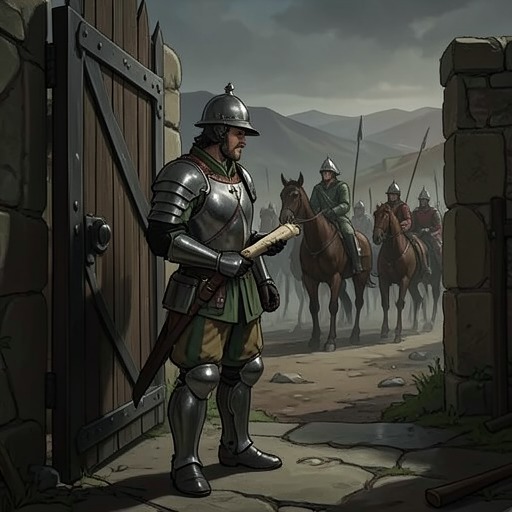
Huang Hao’s influence rests on his access to Liu Shan. When Jiang Wei’s military successes threaten Wei, Deng Ai and Sima Wang devise a plan to undermine the general’s standing with both the ruler and his favorite eunuch. They bribe Huang Hao, after which rumors circulate in Chengdu that Jiang Wei intends to defect to Wei because he is dissatisfied with his authority. Huang Hao then petitions Liu Shan to recall him. Jiang Wei is ordered home while the Wei army moves to make the Shu retreat more difficult.
Warnings and False Reassurance
As the danger to Shu grows, Jiang Wei sends Liu Shan a memorial asking for additional help to defend the kingdom. Huang Hao intercepts the letter and presents it to the ruler as an attempt by Jiang Wei to increase his own influence. The warning is thus not merely ignored: it is recast as evidence against the person raising it.
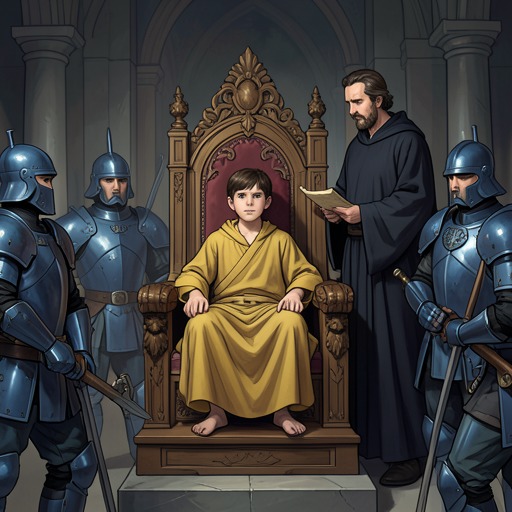
Huang Hao then proposes consulting a shaman, claiming that her deity can reveal the future. At the palace, Liu Shan performs the rituals and burns incense. The shaman, with her hair loosened and shoes removed, dances in a frenzy before collapsing on the altar. Huang Hao announces that the deity has descended; the shaman, speaking in a trance, assures Liu Shan that Shu is at peace and will soon possess Wei as well. Liu Shan believes the performance. With Huang Hao’s help, he disregards Jiang Wei’s letters, and the narrative presents this misplaced confidence as the beginning of Shu’s slide toward destruction.
Fall and Judgment
The account connects Huang Hao’s court influence to a wider institutional failure: military warnings are blocked, a general’s loyalty is questioned through rumors, and an appeal to supernatural reassurance substitutes for a response to the threat. These actions do not make Huang Hao the sole cause of Shu’s collapse, which unfolds amid broader political weakness, but they place him at the center of the court’s refusal to prepare.
After Shu’s fall, Liu Shan arrives in Luoyang. Sima Zhao publicly rebukes the deposed ruler for his dissolute life, his treatment of capable men, and the destruction of his government. Huang Hao, by contrast, is publicly tortured to death for the terrible harm he has done to the kingdom. His ending gives a direct narrative judgment to the earlier pattern: influence exercised through access and misinformation is finally answered by public punishment, after the state it helped weaken has already been lost.